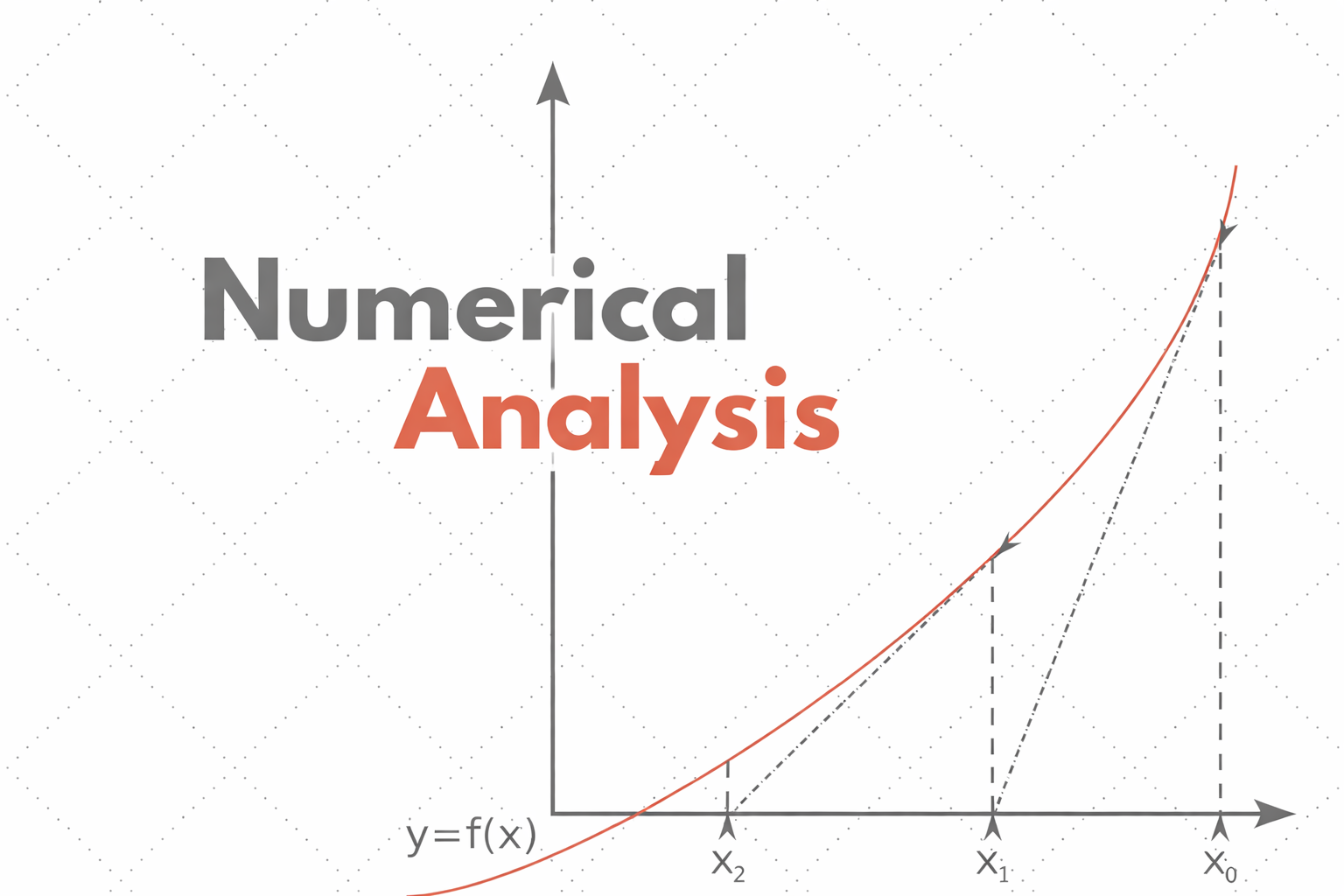
Numerical analysis 1 S(B-C)
The Numerical Analysis 01 course introduces students to scientific computing and fundamental numerical methods for solving engineering and scientific problems. It focuses on numerical problem-solving, discretization techniques, numerical errors, and basic numerical and matrix analysis.
By the end of this course, you will be able to:- Understand the fundamental concepts and principles of scientific computing and numerical analysis;
- Identify the main difficulties and sources of error associated with solving mathematical problems numerically on a computer;
- Develop and implement basic discretization methods for continuous problems;
- Master and apply fundamental techniques of numerical matrix analysis;
- Implement basic numerical computation techniques for solving practical problems;
- Select and apply appropriate numerical methods to solve mathematical problems using a computer.

INFO3: Introduction to Python S(A-B)
Welcome to the Python course!
Python is a versatile programming language, popular for its simplicity, readability, and flexibility. Created by Guido van Rossum and first released in 1991, Python has become an indispensable tool in many fields, from web development to data analysis and artificial intelligence.
In this course, we will explore the fundamentals of Python, from the basics of syntax to advanced concepts in object-oriented programming and beyond. Whether you're a beginner in programming or looking to deepen your knowledge, this course will provide you with the skills needed to master this powerful language.
Get ready to learn, experiment, and create! Python offers a world of opportunities, and this course will be your guide to exploring all its possibilities.



Techniques d’expression 1
Description du cours
Les techniques d'expression sont des méthodes
et des compétences utilisées pour s’exprimer de manière claire, efficace et
persuasive. Ces compétences peuvent inclure la grammaire, la syntaxe, la
ponctuation, la structure de la phrase, le choix des mots, la clarté, la
concision, le style d'écriture, la prononciation, le ton, le rythme, l'écoute
active, etc. Les étudiants apprendront à appliquer ces techniques dans
différents contextes, tels que la rédaction de textes explicatifs à caractère
scientifique, la prise de notes, la prise de parole en public,…
Public cible
Élèves ingénieurs de 2ème année.
Objectifs généraux
- S'exprimer de diverses façons afin de répondre à des besoins de communiquer l'information et d'explorer la langue.
Organiser et formuler ses idées en respectant les règles qui régissent l'organisation interne d'un texte.
Planifier et gérer son projet d'écriture en fonction de la situation de communication.